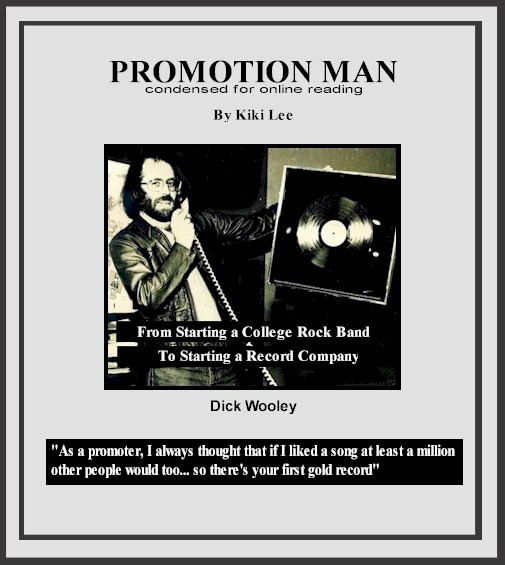
|
Promotion
Man
Condensed for online reading.
By Kiki Lee
Forward ~ Gambling
on a career in Rock and Roll.
Chapter 1 ~ After developing scores of local and regional hits for a
Charlotte record distributor, Atlantic Records recruited Dick in 1967 to head their
Southeast and Midwest promotions. At Atlantic, Dick helped launch many legendary Rock and
R & B artists discovered by Ahmet Ertegun and Jerry Wexler and many are now in the Rock and Roll Hall of Fame.
Chapter 2 ~ After years of hard work at Atlantic
Records, an off road motorcycle accident set Dick to thinking of taking a long hiatus from
the music business. Dick left the Atlantic family and started an extensive and leisurely
tour through Europe and North Africa.
Chapter 3 ~ In 1972 Capricorn Productions cut
ties with Atlantic Records and become Capricorn Records and signing a distribution deal
with Warner Brothers. Dick was selected to be the new VP of promotion for the label and
started what became known as "Southern Rock". Dick established Capricorn Records
as the preeminent leader of the new genre by promoting a string of classic hit
records from 72' to 76'.
Chapter 4 ~ While at Capricorn Dick launched four
unknown artists into the top of the charts before leaving Capricorn in 1976 to
partner with Atlantic Records starting Rabbit Record and Dick Wooley Associates where Dick promoted new
artists into gold and platinum sellers. In 1981, after Disco and punk-pop began to
dominate the charts, Dick with no interest in either retired to the beach on Tybee Island.
Chapter 5 ~ Dick used his record business marketing
skills at the beach and partnered with development firm Benchmark/Atlantic, together they
developed ocean front properties on Hilton Head Island and seven university student
communities. In 1994 the new business computers at Benchmark/Atlantic fascinated Dick and
he began classes in Atlanta at IBM's computer school. By 2004 the Internet was exploding
and Dick still drawn to music decided to expose emerging blues talent ignored by the
media. Similar to Napster, but only showcasing in-house artists Dick launched King Mojo Records offering free music online, ten years later fans from all over the world have
downloaded over two million songs by King Mojo artists. |
Forward
Gambling on a career in Rock and
Roll.
In the fall of 1963 after serving four years in the Navy,
Dick Wooley started college studies in the sleepy South Georgia community of Norman Park.
It was too far from any large town to receive a TV signal so the only link to the outside
music world was radio. Dick would listen to the powerhouse 50,000 watt clear channel radio
station WLAC from Nashville Tennessee where every night big John "R" and Gene
Nobles broadcast their personal selections of blues hits to rural audiences across North
America from Canada to Key West.
...and isolated at school Dick assembled a rock band "The Fabulous Serpents"
playing local venues and recorded a 45 single that became popular in the region. Dick
decided to promote the bands own shows, rent a hall, buy radio ads, sell tickets and
divide the gate equally among the band.
This worked out fine during the school year, but in summer band members went their
separate ways back to their home towns. To keep his newly acquired music connections going
Dick took a summer sales job at Liberty Records.Music was music business and then
Southland Record Distributor in Atlanta in 1965, selling and inventorying record stocks
sent to the mom and pop record stores throughout the Southeast. On nights and weekends
Dick began managing local bands, booking gigs and promoting their shows.
In the summer in 1966
Dick's hard work began to pay off when one of his bands played at an Atlanta DJ's
high school show, in return the DJ played their single on the number one top 40 rock
station WQXI the single went number-one on the station's chart. This
attracted attention from Burt Burns owner of New York's Bang Records, after a
quickly arranged trip to the Big Apple a disastrous meeting took place between he, the
band and Burt Burns.
At the meeting in the Bang Records offices Dick's business advice was ignored by the band
members and they began demanding control of production and unearned star-treatment. The
meeting with Burt Burns quickly turned sour and the band was rejected. The band's single
never made it out of the Atlanta market and they were soon back to square-one. After
paying all the expenses for the disastrous New York trip Dick was broke and discouraged,
but Dick had learned a valuable lesson about bands and record companies. Despite the
setback at Bang Records it provided Dick with a door opener in the music business.
Shortly after the failed leap into the big
time record business, John Towels the manager of F & F Arnold record
distributors in Charlotte asked Dick to promote their regionally distributed indy labels,
John represented many great indy companies like; Atlantic Records, Monument Records and
Warner Brothers Records. This was a
breakthrough for Dick because in addition to being paid to promote the music he loved, he
was allowed to promote his rock and blues shows on weekends.
Dick had the good fortune to work with
some of the most interesting people in the music business promoting their indy product,
including the legendary mob-boss Morris Levy of Roulette Records, later the hit TV series
the Sopranos based their record business character "Herman Hesh' Rabkin
on Morris. Dick helped many other artists get their first break including Kenny Rogers by
helping launch his first solo hit single and career, and working with Elvis Presley's
Memphis Mafia, Marty Lacker and the legendary Roy Orbison.
In the day to day promoting at F & F Dick broke out several hit records and discovered
a local "beach music" band called "The Okasions". The band had
recorded and pressed a single costing all of $400 in their home town and brought it to
Dick for promotion, although Beach Music wasn't Dick's thing he soon had their record
spinning across Carolina radio stations and the single went on to became the million
selling "Girlwatcher". And then...
Chapter 1
Atlantic Records: Making Music Legends.
Dickey Kline, Atlantic Records legendary Miami based promo man had known Dick from his
Atlanta sales days and watched his progress in promotion at the distributor in the
Carolinas. At an Atlantic Records convention in the Bahamas, Dickey introduced Dick Wooley
to Atlantic's newly appointed Vice President of Promotion Jerry Greenberg. Jerry was in
the process of building his new promotion team and on the spot recruited Dick to head-up
Atlantic's Southeast and Midwest promotions.
Dick was ready and eager for the opportunity to work for a great company like Atlantic
Records and with the best wishes from John Towles and F & F distributors he packed the
car and moved to Cincinnati Ohio to open a regional promotion office for Atlantic.
Record promotion was not an easy job in the halcyon days of vinyl records in 1967. It was
years before the Interstate highway system would be completed and Dick routinely drove
fifteen-hundred miles a week over two-lane black top roads to promote Atlantic Records to
large and small market Top 40 and R & B radio stations throughout the Midwest and
Southeast. Dick stated, "Anytime I saw a radio tower I'd pull in their parking lot
and start promoting Atlantic records to whoever was there".
Building personal relations and acquiring many lifelong friendships with radio programmers
was Dick's and Atlantic Records strength. Atlantic's people were quality people and very
professional in the way they handled Atlantic's business affairs. No company in the
business was more respected or had more pride filled, hard working and loyal employees.
Atlantic spared no expense in helping it's promotion men be successful in making solid
industry alliances. It was the promotion mans responsibility to cajole radio programmers,
entertain artists and solidify industry alliances. After all, these people were key to
breaking Atlantic's new records and keeping Atlantic artists high on the charts.
Unlike many other record companies of the day Atlantic was not into local or regional pay
for play, or as it was called by government investigators "Payola". Money wasn't
exchanged for airplay, "We offered something more valuable to music programmers, we
gave them the career building courtesy of head-hunting job opportunities for them in other
markets and we gave them the respect they deserved". In return, they showed their
appreciation when the chips were down by adding our unknown artists records to their radio playlists.
Record promotion was always challenging, because at the time Atlantic was still a small
Indy label that could only afford six full-time promotion men and each of these men had
the responsibility to make sure every radio station, show promoter and independent record
distributor in America was doing their best for Atlantic Records. This fabled gang-of-six
was headed by Jerry Greenberg,
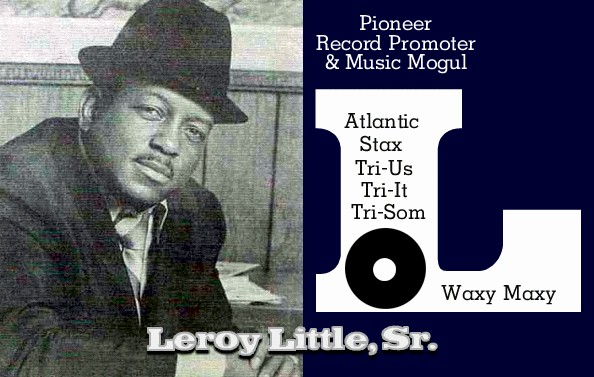
Dickey Kline, Leroy Little, Bob Greenberg, Vince Faracci and Dick Wooley.
These six guys could sometimes work promotion miracles by getting Atlantic records to the
top of the charts, and this small group did it against all odds especially when competing
against the more heavily financed major record companies. For example, back in the day
music publishers had a great deal of power and it was not uncommon for two competing
labels to release the same publishers song by different artists and sometimes even on the
same day. "When this happened, Jerry Greenberg would put his assistant Barbra Harris
on a plane with boxes of DJ singles and she would fly around the country delivering these
records by hand to each of us promotion men. We in turn would drive through our territory
delivering the new record to radio stations by hand. We'd cover the entire country in
forty-eight hours and by the time the competition knew what happened our record was being
played by so many radio stations the race was over before they'd even left the starting
gate... they never had a chance. It was like we were competing in the record business
Olympics and the gang at Atlantic never lost one of those head-to-head challenges."
Dick said, "It was a genuine honor and privilege being a member of that elite group of
promo men and it was a once in a lifetime
experience to work with legendary music geniuses like Ahmet Ertegun,
Jerry Wexler and Tom Dowd."
During the 1960's Atlantic Records established many great R & B and Rock and
Roll legends and several are now in the "Rock & Roll Hall Of Fame" To name
only a few: Percy
Sledge, Otis Redding, Wilson Pickett, Aretha Franklin, Joe Tex, The
Young Rascals, Allman Brothers, King Curtis, Sam & Dave, Crosby, Stills, Nash and
Young, Buffalo Springfield, Iron Butterfly, Cream, Eric Clapton, Delaney and Bonnie, Led Zeppelin,
YES, Emerson, Lake and Palmer,
Derek And The Dominos.
Jerry Wexler
legendary producer |

Ahmet Ertegun
Atlantic President |

Tom Dowd
legendary producer |
Jerry Greenberg
VP of promotion |
|
The 1960's was a turbulent period in American history, the bloody Vietnam War had split
the country into two camps, the media labeled the two as the "Peacenicks" and
the "Hawks". The conservative Hawks, claimed they were the true American
patriots, these are the same people who think making war is great, as long as they don't
have to fight it. Instead their leaders instigate wars and then send young people off
fight them. The young draft age anti-war Peacenicks who rightly objected to being used as
cannon-fodder in America's murderous misadventure in Vietnam. They often marched in
protest of the war and would find themselves under local police and FBI surveillance, many
Peacenicks were often beaten or arrested on trumped up charges by overly aggressive
officials. This made radical and violent people out of what had been peaceful, protesters
excersizing their legal constitutional rights to assemble and protest an illegal war. In
many cities authorities routinely enforced a strict curfew, arresting violators and some
cities even declared martial law to keep young Peacenicks or Hippies from gathering. For
many of us America had lost it's way and had become a Police State.
In 1968 Atlantic Records relocated Dick back to his hometown of Atlanta Georgia to better
service the Southeastern radio market. In booming Atlanta the gathering spot for the young
crowd was the centrally located Piedmont Park. On weekends local bands played for the
young crowds and momentum from this exposure propelled many new bands into the national
spotlight, like; Hydra, the Hampton Grease Band and the Allman Brothers Band.
Sometimes the bands plugged their amps and equipment into the city park power supply but
police had warned them to stop. Dick witnessed how out of control police became when on a
peaceful Sunday afternoon the free music concert in the park turned into a police riot. As
a local band was playing to the young crowd the aroma of burning hemp began to waft
in the air. Suddenly as if on signal the Atlanta police waded into the crowd of young
spectators with nightsticks slashing a bloody trail of longhaired teens in their wake. Not
satisfied with their vicious show of force, the police continued to beat on the helpless
teens and rough them up in front of local TV cameras as they drug them across the softball
field and into police vans.
Local TV news crews filmed the Atlanta police riot and even showed one fat cop smashing
his nightstick across the face of a helpless handcuffed teen. The evening news claimed
that so called hippies were at fault invading the city's public parks and that heroic
Atlanta police officers had been forced to remove them from the family orientated park. No
legal action ever mitigated the damage done to these peaceful teens in the brutal attack
by the redneck thugs wearing Atlanta police uniforms. "I lost all respect for
the police and never watched local news again", said Dick.
The military industrial complex that President Eisenhower warned America about was in full
dominance. The so called party of war was in power and as usual disenfranchising the
anti-war community which was largely unorganized and powerless. Students, artists and
musicians seemed to express the frustration more eloquently than anyone about our
country's inability to end the draft, end the war or bring our troops home from the
illegal war in Vietnam.
This turbulent period produced entertainment history as well and Atlantic Records was
proud to be a part of the solutions offered by counterculture music. Atlantic had signed
many of the anti-war movement's leading voices and helped a generation of counterculture
artists fashion profound changes in our society's conscience by producing the most
socially relevant music of the century.
"It's dangerous to be right when the government is wrong". After Mayor Dailey
ordered the police attack on peaceful protestors at Chicago's Democratic
convention, and then the tragic Kent State student massacre by the Ohio National
Guard, the government's illegal war began to unravel and it became the foremost issue on
everyone's mind.
Most people hadn't spoken out until then, in America the average person on the street was
cowed into silence because the powerful military industrial financed conservatives who
ruled the media propaganda machine promoted the the same ideology as Germany had in the
thirties, "my country right or wrong". Regular, hard working folks were occupied
with making a living or afraid to speak out against the illegal war. America has been and
still is in denial about the destructive nature of our culture influenced by the military
industrial complex that President Eisenhower warned the nation about.
Dick had encountered the hand of government intrusion every day when calling on radio
stations around the country promoting Atlantic's socially active artists and found that
most of the radio programmers were paranoid about attracting FCC attention, afraid of
government retaliation against their license if they played counterculture music. This
made for tough times in promoting records, "our jobs depended on getting airplay for
new artists and every week we went into these stations to battle radio programmers
for air time on our socially progressive records".
At the time, AM stations dominated all markets and they all chose to play it safe by
programming mindless songs we called "bubblegum music". But that started to
change after the social phenomenon of Woodstock, and the "Woodstock generation"
began to demand progressive music on radio stations. The change in music was irreversible,
as someone said "no one can stop an idea when its time has come".
Another unnerving example of the "Big Brother" atmosphere of the time began one
day when Dick was in Miami promoting
records at local stations. Atlantic's legendary
record producer Tom Dowd was in town at
the studio producing a new album with Eric Clapton, Duane Allman, Bobby Whitlock, Jim
Gordon and Carl Radle, to be known as "Derek and the
Dominos." Tom called Dick and invited him to come by and sit in on his
session at the Criteria Studios.
Ahmet Ertegun, the owner of Atlantic Records was at the session when Dick arrived
and as he recalls, "the music made in that north Miami studio can only be described
as blues-magic." Some months later, when Atlantic scheduled the release of the new
"Derek and the Dominos" album, naturally Ahmet's and my own expectations were
very high for the album. The promotion team tried to get national airplay, but once again
the dominant AM stations refused to play the album or even the first single
"Layla". They made the same old excuses they always used... it's too progressive
for their audience (code for "we're afraid to play it because the FCC might not like
it). Dick said, "This was the last straw for me, these timid programmers falsely
claimed they were Rock and Roll stations! "Rock and Roll is all about new
music and Layla was the best new music in a decade. I wondered how long these bed-wetting
programmers could hold back against the rising tide of change demanded by their young
"Woodstock Generation" listeners. "I held my tongue so I wouldn't embarrass
Atlantic Records, but I was mad as Hell at these stations because I knew there had to be a
better way to expose these great artists without groveling before these tin-eared and
cowardly AM programmers."
In hindsight those timid radio programmers must feel remorse or some guilt, because today
they know they missed a once-in-a-lifetime opportunity to help shape music's future and
most likely shape our country's history. I wonder how different things could have been if
AM radio had been onboard the music revolution early on, giving airplay to the iconic
social voices of artists like: "Janis Joplin, Bob Dylan, Jimi Hendrix, Led
Zeppelin, Eric Clapton" and so many others. "Many of these AM programmers,
and by the way us record guys know who they are, have written in books or blogs claiming
they were in on the 60's music revolution from the very beginning... not".
Late in 1971 a freak motorcycle accident sidelined Dick for a while, but it provided a
quiet time to think about where he was going in life, what was lacking in record promotion
and what he wanted to achieve. Just grateful to be alive after the spill, he took the
opportunity to reflect and made a life changing decision. Dick said, "I'd been
working non-stop in music and at Atlantic for some time, the accident provided the
perfect excuse and opportunity to get away without feeling guilty about letting down his
Atlantic Records family. It was time to get away, travel and to make family a priority.
Dick told Atlantic he was taking a hiatus... a very long one."

ATLANTIC RECORDS
1960's-1970's |

ATCO RECORDS
1960's-1970's |
CAPRICORN PROD.
1969-1972 |
Editors Note: (a) After Dick left Atlantic Records, an example of how
entrenched AM radio was in playing mindless songs, i.e. "Sugar, Sugar" by the
Archies, the great promotion staff at Atlantic Records that now included Phillip Rauls and Mario Medious worked a whole year to get "Layla" on major AM
radio playlists. Per Atlantic's VP Dickey Kline, WIXY in Cleveland was the first major
station to play Layla. By the way, recently Layla was voted the "Number one song
in Rock History"... (b) Atlantic Album Discography
|
|
| Chapter 2 The Adventure: The hiatus... a very long one.
Two weeks after giving notice to his friends at Atlantic,
Dick, his wife and young son Christian left Atlanta and flew to Paris. They had no
agenda, all travel was done on the spur of the moment and every day was an unplanned
adventure, after all, we didn't want to waste a once in a lifetime opportunity.
"Our first day in Paris we regretted not reading the travel tips more carefully, we'd
packed and planned for every contingency and had arrived with five huge bags of clothes
that we now had to drag around town and by the time we crashed at our first hotel that
night we were totally exhausted. The next morning we sorted out and prioritized every
item, anything that didn't fit snuggly into two backpacks was tossed in a box and shipped
back home. With our first big problem solved, we were ready for anything."
We visited nearly every Paris museum, took every walking tour, stuffed ourselves during
every dining experience, but after a week we were satiated and ready for a change of
scenery, maybe at a beach. We looked over some travel brochures in the hotel lobby and
decided to take a train south through France and regroup on the beach in sunny Portugal.
We boarded the night train at the Gare Saint Lazare Paris's main train station
and began our first train adventure. In the middle of the night we were awakened
unexpectedly and directed to change trains at the French boarder, we produced our
passports to the officially dressed agents that passed through the compartments. This was
the first boarder crossing we'd experienced, disconcerting as it was the first time, we
got used to it before long and soon we were on our way down the beautiful rocky coastline
of Portugal and on into the capitol city of Lisbon.
Lisbon is an ancient and beautiful old red tiled roof city, a contrast of modern bridges
and meandering cobblestone streets lined with ancient whitewashed houses. We took our time
looking around and then took the trolley car tour to all the more popular sight, finally
we decided to find a quiet place to unwind. Back at the Lisbon train station we climbed
aboard an old wooden streetcar that rumbled up the coast and delivered us to the seaside
casino village of Estoril, asking locals in the market square about lodging, we were
directed up the hills to a rambling ivy covered villa overlooking the village and harbor.
The view was beautiful and the villa was staffed by a friendly Portuguese family that
prepared wonderful home cooked meals for us everyday and for the rest of the month we just
relaxed and forgot about the outside world. We took long walks around town, explored
nearby historic castles, we enjoyed the warm hospitality and friendly people of Portugal.
I would love to return to Portugal, the people were great, the food was fantastic and we
would have stayed longer, but after a month of being lazy it was either time to move on,
or put down roots. So we decided to visit Morocco and the next morning we set off from the
Lisbon train station to arrive in Algeciras, Spain where we boarded a large ferry that
passed through the Straits of Gibraltar and on to the small Spanish colony of Ceuta on the
north coast of Africa.
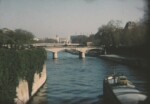
A view of the Seine from a Paris bridge |
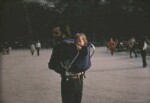
Dick & Christian stroll through a Paris park |
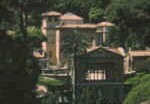
The villa overlooking
Estoril, Portugal |
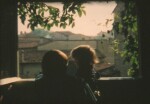
The View from our
Window in Estoril |
We arrived at Ceuta in the midday tropical heat and instantly we were surrounded by a mob
of street beggars and vendors hawking everything from straw hats to hashish. After
lingering long enough to make a purchase, we made a dash to the town's dusty bus terminal.
There it was crowded with travelers milling around the ticket booths and we arrived just
in time to see our fellow ferry passengers leave the terminal in a fog of street dust
aboard what we found out was the last bus into Morocco until morning. A uniformed man
standing nearby overheard us griping about missing our bus, he'd obviously seen other
people in this same situation and for a price offered to drive us in his Mercedes limo
into the city of Tetouan only a few miles inside the Moroccan boarder.
We very were anxious to make it across the boarder before sundown so we would have time to
look for a comfortable and affordable hotel room. With no other alternatives, we haggled a
few more minutes with him over the price and agreed to a price we thought was fair. We got
in the back seat of the comfortable black Mercedes, a young traveler we recognized from
the ferry passed by and asked if we had room for him. He was from the Netherlands and we
decided to take him with us, he threw his backpack into the open trunk and climbed in the
front seat. We all settled in and the long nose of the Mercedes pointed through the
crowded pothole filled city streets of Ceuta and out onto a thin strip of asphalt heading
south through the barren desert landscape toward the Kingdom of Morocco.
As we approached the Moroccan checkpoint gate at the boarder the driver slowed down, ahead
we saw the same bus we'd missed earlier at the terminal stopped in front of us. All the
passenger were milling around outside the bus and a half dozen of the armed boarder guards
were searching through each piece of their luggage. Another guard standing in the middle
of the road beckoned us forward with his hand and to stop, he leaned into the drivers
window and plucked some folded cash from our drivers hand, the guard nodded and waived us
through the checkpoint. Wow... our limo driver and new very best friend had just saved our
asses from a luggage search by the Moroccan boarder guards. We couldn't help ourselves, we
started laughing and didn't stop until we drove into the boarder city of Tetouan. ...Our
adventure had started.
We'd arrived in Tetouan at dusk, still light enough to see that it was an dirty adobe
outpost with crumbling walls and failed streets who's main industry at the time apparently
was drug trafficking, because everyone we passed on the street was trying to sell us
hashish. The town as I would remember later, reminded me of the "pirate
city" of Tatooine in the movie Star Wars and especially the bar scene, complete with
hooded figures lurking through and about it's many dark alleys.
Our limo driver and new best friend, went out of his way to find us a decent hotel for the
night, we thanked him and dropped off our backpacks in our rooms. We hadn't eaten since
morning and ventured into the streets to find a small restaurant where no one spoke
English but our ferry passenger friend from the Netherlands spoke French and we were able
to order a delicious local dish of "couscous and pigeon". Later, walking back to
the hotel we met a couple of our fellow ferry passengers from earlier in the day that had
finally made it through the boarder checkpoint and were now looking for a place for the
night, at our hotel we told them our boarder guard story. They were not happy campers.
Under the circumstances, being alone in a foreign drug mecca was dicey at best and the
idea of going native seemed like the best thing for us to do. We wanted to go deeper into
Morocco to our destination, the ancient city of Fez. Acting on a tip from a fellow
traveler, we awoke at daybreak and began to search for a green school bus on a street not
too far from our hotel. We finally found it parked on a side street, the creaky looking
old bus obviously had seen better days, there was a rope cargo net slung over the top of
the bus that held passengers luggage and pinned down the many live chickens and a few
small farm animals to the roof.
We gave the driver cash for a couple of tickets and got onboard, immediately we noticing
that no one else from the ferry onboard, suddenly we felt very alone. We waited in silent
anticipation until the driver was satisfied his bus had enough paying passengers to make
the trip. Apparently it did, so he slid into the worn out drivers seat, grinding the
gearshift lever forward and the bus lurched out of town through the early morning haze in
a cloud of diesel smoke.
The bus climbed up narrow gravel roads that twisted and turned through steep mountain
inclines past miles upon miles of cultivated poppy farms. Occasionally the bus would stop
to pick up a Gypsy families waiting along the road by a vast a city of tents and motor
caravans. By late afternoon we'd made it to the top of Morocco's rugged Atlas Mountains.
After a day's travel through white-knuckle mountain roads, we began a slow decent down the
mountain road amid the acrid smoke from overheating brakes that wafted up through the bus
floorboards. Descending into the barren foothills and late in the evening we finally
finally reached the still raging hot desert floor and after a few more hours through the
heat we entered the ancient walled city of Fez through beautifully decorated Moorish
gates.
Fez is an ancient city that sits straddling the banks of the Fez river and for thousands
of years has been the center of trade along the silk road stretching from the China
in the far east to Venice Italy. Fez was the market center for the spice trade, colorfully
dyed fabric, handmade rugs, hand tooled leather and ivory. The city is isolated, cut off
from the rest of the world by the Atlas mountains on one side, endless desert on the
other... So here we stood, engulfed in the exotic aroma of spice and pack animals,
surrounded by an ancient old world and witnessing sights that travelers hundreds of years
ago would recognize, we were truly in a different world.
We quickly adjusted to our new surroundings and toured the thousand year old medina and
it's labyrinth of narrow passageways that accommodated the traffic of both people and pack
animals piled high with dry goods and wood cases. Doing our best to avoid being trampled
by the heavily laden donkey caravans we were approached by an amazing child guide who
spoke seven languages fluently and offered to guide us through the maze of alleys and
hidden vendor stalls filled with spice and colorful trade goods.
We haggled with merchants trading traditional Moroccan hand-woven rugs and wall hangings.
We looked through the shops, looked for bargains, lingering at turn of the century French
sidewalk cafe's, ate croissants and sipped the traditional Moroccan sweet mint tea, it was
almost like we'd been there in a previous life. At the end of a day we'd relax at the
hotel after an exotic meal, puff on exotic herbs and hashish from a classic wood and
ceramic hookah and watch the sunset over the colorful desert city from our balcony. Life
was good. |
We awoke every morning
to the hoofbeats coming from the street below, as columns of Moroccan Royal Calvary
passed. Cadets in regal uniforms sat astride these elegant jet black mules in double file
marching down the avenue. They flew the King's colors from long pikes and we'd been told
they were the ceremonial escorts for the Moroccan royal family for state occasions and in
national parades. The mules were beautiful huge animals and their colorfully festooned
bridals and saddles were true works of leather art. We watched this ancient world parade
go by every morning as we sipped our mint tea at a sidewalk cafe on the cobble stone
street below our hotel room. Time seemed to stand still. But in this most fantastic
ancient city, time actually flew by and all too soon we had to pack up.
After a few short weeks in this fantastic ancient city of Fez we were running low on
necessary supplies for our young son Christian and were anxious to get back to a modern
city and find a western style drug store. We rented a small French car in the city center
and began our drive through the desert, speeding over a narrow strip of asphalt winding
through the endless sandy landscape and finally reached the gates of the biblical city
Rabat. A festival of some sort was in progress and the streets were packed with colorfully
dressed people blocking every access, we stayed long enough to take in the sights and then
moved on through the desert once again.
We spent the night at a dingy ocean-front hotel and early the next morning began to drive
up the foggy coastline toward Tangier. Tangier is a large city that is nothing like the
ancient towns we'd visited recently, there was little there to remind us we were still in
Morocco, except the ubiquitous street vendors in caftans selling trinkets to tourists.
We overnighted in a smart European style hotel next to the harbor and booked passage on
the morning ferry back to the European continent. The customs officials here were far more
meticulous than the ones we encountered during our first boarder entry, we stood by as an
agent examined every inch of our luggage.
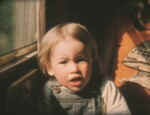
Christian on the Train
(Note ABB Tee Shirt) |
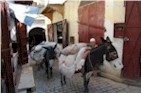
In old town Fez
(Donkeys have the right of way in the Medina) |
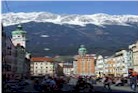
Innsbruck, Austria
(Great food, great beer and great skiing) |
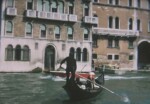
Gondola ride, Venice
(So many things to do) |
Thankfully the night before we'd flushed all contraband and after the search of our
luggage boarded the ferry from Tangier Morocco to Tarifa Spain. Most of our time remained
on our Eurorail pass and we traveled by train to Rome for a few days where we toured the
Vatican Museum several times, went through the Sistine Chapel and of course visited the
Roman Coliseum.
Then we went by train up to Florence and toured the famous Piazza Duomo, Uffizi museum,
Michelangelo's statue of David and other iconic works by Florentine artists. After a few
days of sightseeing in Florence we were on our way again, this time to Venice for an
extended layover. Once in Venice we did what all tourist do, rode in a gondola, took a
trip to the island of Murano where we watched hand blown glass artists fashion intricate
works of art and delicate glass treasures for the crowds. Amazed by the fiery spectacle we
bought an elaborate glass chandelier as a souvenir of our visit.
Fatigued from the constant touring we caught a sleeper train to Innsbruck Austria and
found a cozy room in a Tyrolian chalet at the foot of a mountain above the village of
Innsbruck. Our room overlooked the city and on the bed were stacked warm foot-thick duck
down comforters, a welcome touch at night for keeping the cold mountain air at bay.
Each day we took a gondola cable car to the top of the mountain where we could almost see
the entire range of sharp peaks that jutted skyward in the Tyrolian Alps. We bought a
complete set of ski equipment and taught ourselves how to ski on the soft spring snow at
the most spectacular mountain range in Europe. In the evenings, after a day of skiing and
we'd regroup at the chalet and take a steaming hot bath in a huge bathtub about the size
of a small car, then we'd a walk down the winding streets to a family owned tavern, relax
by an blazing fire and enjoy the freshly brewed local beer and dine on the best veal
schnitzel in the world.
After skiing for a couple of weeks on various Tyrolian slopes, we hopped on an overnight
train through the Austrian / Swiss Alps into Zurich Switzerland. Zurich was a
disappointment, it was a cold dirty gray city where everything cost twice as much as
anywhere else and we couldn't wait to leave.
The next morning we made a hasty return to the train station, boarded the bullet-train to
Amsterdam and sped north at 150 mph. The landscape was a blur of multi-colored tulip
fields, farms and wooden windmills doting the flat landscape most of which had been
reclaimed from the sea, as was most land in the Netherlands.
We arrived at the stately gray stone train station in downtown Amsterdam and instantly
fell in love with the city, it's beautiful architecture, the narrow multi-story homes
lining cobblestone streets along the canals and the liberal lifestyle of Amsterdam
citizens . "Amsterdam is a city I could live in forever, I never got tired of hearing
about it's unique history, or looking at the collections of eclectic art in the many
museums and envying the gracious lifestyle that evolved from centuries of free thinking,
open minded people ... I loved it."
Only two short weeks in Amsterdam, damn. We felt bad leaving, but we planned on seeing the
King Tut exhibition at the British Museum, it was the first time the collection had been
on public display outside of Egypt and we had to get there before it left London. We
caught the ferry across the English channel and took a five day layover in London to visit
the Tut exhibition many, many times and of course to see all the famous London sights.
After our museum and Tower of London crown jewel tours, we left the city and went south by
train to the seaside resort of Brighton. Our first night we lodged at a local family owned
B & B enjoying the unique English breakfast, made from whatever was served at dinner
the previous night, plus two eggs and a banger (sausage). After a few days of old school
English seaside relaxing we were ready to move on and we rented a camper van and began a
leisurely drive through the lush green countryside of Western England and up toward Wales.
"It took a few miles for me to get used to driving on the wrong (left) side of the
road. However, I picked it up quickly and drove into Wales that day where we toured old
gray stone B & B's and pubs in every hamlet along the way, some of the pubs had been
open and serving the public continuously for several hundred years. We'd stop in quaint
smoky pubs for warm beer and some pub-grub and listen to the locals chat in their native
Welsh language. Although my father's family was of Welsh origin, I couldn't understand a
word of the language, I was just thankful the road signs were printed in Welsh and
English."
Finally, after a few months the time our departure approached, we backtracked over the
channel by ferry, then by train we quickly passed through Belgium's industrial grime and
arrived in the micro-country of Luxembourg with a day to spare before our return flight to
America. Time enough to relax, gather our thoughts and reflect on our once in a lifetime
travel adventure.
"After being deeply involved in other cultures for months, outside our comfort
zone, the mind opens up to new possibilities and new potential. This extended travel
adventure was a life changing experience for me. I hadn't thought about the music business
one time, my only thoughts were about the people I loved, my family and friends"
The months of travel seemed to go by in an instant and before we knew it we were inside a
plane flying over the dark waters of the Atlantic and back into Atlanta. After landing, we
gathered our backpacks at the baggage carousel, hailed a cab and told the driver to get us
to the nearest Krystal hamburger joint he could find where we wolfed down about a dozen of
their tasty little sliders, the first "real" hamburgers we'd had for months.
Life was good... and it was good to be home.
|
|
| Chapter 3 Capricorn Records: The start-up.
Dick returned home after months of travel and
realized the hiatus could not have been better timed because the tide had turned in Rock
radio. New independent FM stations were popping up everywhere and playing progressive rock
full time, even car manufactures began installing FM radios and driving the once
too-big-to-fail AM stations crazy. Hooray... finally never having to listen to bubblegum
music again, progressive music was establishing a solid ratings presence on radio stations
across the country. But, sadly Dick reflected that he no longer worked with the greatest
record company ever. "My timing for the trip had been a great, but leaving Atlantic
Records was like leaving my family."
After being approached by several record companies, Dick was satisfied that all would go
well back in the USA. He was full of enthusiasm and new promotion ideas when Frank Fenter
at Capricorn Productions in Macon Georgia called and soon everything went into high gear.
Frank invited Dick to a meeting in Macon with he and his partner artist manager Phil
Walden. Dick knew Frank very well from the time they spent together at Atlantic Records,
they'd shared information on artists when Frank was running Atlantic's European operation
from their London office.
Frank had been a rising star at Atlantic Records and was a highly respected record man
who'd surprised everyone at the company in 1969 by moving from London England to Macon
Georgia and to partner with the late Otis Redding's manager Phil Walden. Together they
started a production company called Capricorn Production and Atlantic records distributed
their albums through Atlantic's pop label Atco.
Frank was the man behind the scene who'd put the production company deal together to be
financed by Atlantic. Jerry Wexler was both Frank and Phil's mentor and had helped the
company start up by giving them a sure Top10 Hit Single, "Sunshine" by
"Jonathan Edwards."
It had been three years since then and Dick was anxious to hear what the two partners had
in mind as he drove the ninety mils down to Macon. The meeting, held over a cocktail lunch
at Mark's Cellar with Phil and Frank was a real eye-opener for Dick. Their lunch consisted
of a cup of "Hoppin' John" (black-eyed peas, over rice and deep-fried fatback)
they washed it all down with Vodka Martinis in big iced tea glasses. Dick said, "I
wasn't much of a alcohol drinker due to my years of martial arts training but even if I
had been, there is no way I could have keep pace with those two guys."
As one Vodka martini followed another Dick said, "the two partners tag-teamed me, a
technique I found out later was what they were known to use very effectively in negation.
They offered up one idea after another and probed me on my thoughts of how I could help
them make Capricorn production company into a stand-alone record company. My head was
swimming with infinite possibilities... or was it the booze?"
"I nursed my drink for as long as I could to keep my head clear as they sold me on
their their plan to move me to Macon and help launch a real record company from the
"yet to be profitable" production company".
"I wanted to leave the meeting on a positive note, but as the three hour lunch wound
down I was by no means convinced it was in my best interest to promote a new start-up
label in the South Georgia backwater town of Macon and I was only being offered half the
salary I'd been making at Atlantic Records!"
Back in Atlanta, Dick's friends advised him not to move to Macon, mainly because he'd
gamble a hard earned reputation in the music business on an unknown start-up label.
Also, industry wags maintained that the Allman Brothers Band would never recover from the
death of their charismatic leader Duane Allman just last October.
There was much truth in what they said, but that wasn't the real obstacle, the real
obstacle for Dick to overcome was the Allman Brothers were almost unknown outside their
Southeastern market, but that was mainly due to their in-house booking agency Paragon, run
by Alex Hodges who booked them where the money was and that was in the south. Also, the
Allman Brothers had sold "zero singles" in what was still a very
singles-oriented business and combined they'd only sold about thirty thousand albums. A
paltry amount in those days for any band.
That was the reality. Dick knew the real sales figures at Capricorn Productions from
working at Atlantic and it was not an encouraging number. Dick reasoned that the lack of
sales for the ABB was at that time major AM radio wouldn't play progressive or regional
artists.
Phil's publicity proclaimed through his publicity sources and to the media that the
company had sold ninety thousand ABB albums, but Phil always used a quirky formula when it
came to numbers, if a number helped, it was multiplied by three and if it didn't it was
divided by three.
Dick had to make a life changing decision whether or not to sell a stately home in Atlanta
and move to a small South Georgia town that was more often than not referred to as
"the redneck capitol" of Georgia.
There was no way to get around it, Macon was a southern backwater who's architecture and
attitude had changed little since the Civil War and it was led by a two-term white
supremacists mayor called "Machine Gun" Ronnie Thompson. Thompson got his
nickname and national media attention for his disgraceful actions during Macon's
predominately black sanitation workers strike. Thompson stood atop a National Guard
armored vehicle in a school playground waving around a Thompson submachine gun and giving
Macon Police officers orders to shoot to kill any disorderly black citizens.
Thompson was a product of the local gene pool, the kind of knuckle dragging rednecks that
hassled Dick many times before while he promoted Atlantic R&B records to black owned
radio stations and associated with black DJ's and artists. To say the least the Capricorn
job being offered was severely handicapped by the reality of having to live on half his
usual salary and to move to Macon.
In addition to Macon citizens racist attitude and rural location Dick had reservations
about Phil's well known diva temperament, but rationalized past that after remembering
their good times together at the many Atlantic's Otis Redding shows. And even the
bad times they'd shared when Phil, Frank and Dick were
in the Atlantic suite at the Rivera hotel in Las Vegas attending a Billboard convention in
December of 1967 when a phone call came with the
tragic news of Otis Redding's plane crash.
Dick knew Frank and Phil needed help fast, they were not record promoters and they knew
that Dick was the man that would get them their much needed airplay. Frank and Phil had a
new Allman Brothers album coming out soon and the dominate rumors was it would be a flop
without Duane Allman. Frank and Phil new if they lost this album they'd lose the company
and they were pressing hard for Dick's answer.
The deal came after Johnny Sandlin played Dick some of the raw studio tracks from the
upcoming Allman Brothers album and Dick was blown away. After Johnny's preview there was a
meeting of the minds between Dick, Phil and Frank, they began solidifying details,
responsibilities each would have in the new distribution venture with Warner Brothers.
Frank of course would continue to manage the company's production and liaison with
Burbank, Phil would continue to manage the artists and Dick had the job of getting their
unknown artists airplay and getting the records on the national charts. |
The timing for the
new Capricorn label was a bit sketchy, Frank Fenter had just finalized the deal with
Warner Brothers that split Capricorn productions from their long-time mentors at Atlantic
Records. We were jumping into an untested distribution pact with Warner Brothers, but Phil
and Frank wanted a real record label of their own, something they said Atlantic had
resisted until 1971 and then only released their production company logo on a pink label.
Phil and Frank felt slighted, while Warner Brothers had encouraged them all along to use
the logo of Capricorn Records and promised a big roll out that would increase the new
label's profile. In doing this Mo Ostin and Joe Smith would keep the new label inside the
WEA distribution family, a newly formed corporate entity that would distribute Warner
Brothers, Electra and Atlantic Records product.
However, in the record business the street buzz was, "If Frank and Phil left their
roots at soulful Atlantic Records for distribution by Warner Brothers, who's biggest
artist was still Frank Sinatra, it would be the kiss of death for the new label."
Dick heard this negative gossip, but said, "It didn't bother me. My experience with
Atlantic had been that we were always the underdog, so what you do is just put on blinders
and soldier forward. It was a tough business, and we knew the competition fought hard..
But I'd competed in karate tournaments, winning my share, but had my ass handed to me too
and I knew one thing, promoting records could never be more painful or humbling than
that... so bring it on."
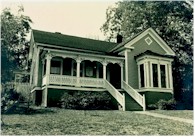
In a few weeks time, Dick and his family settled into a rambling 1890's era home on a red
brick, tree lined street. It was near downtown, only a few blocks from the offices on
Cotton Avenue where Dick, Frank and Phil would share what had been the office of the late
Otis Redding.
The record company office consisted of two small rooms at street level in a building
shared by the Paragon Agency who's offices filled the basement. A small reception area
where Carolyn Brown, who'd been president of the Otis Redding fan club and Rose Lane White
who was to assistant Frank and Dick.
The funky rooms had dark red theater-curtains hanging from every wall to hide the cracks,
and thread-bare carpets hid a drain that was once an vital part of the former tenants
business, a chicken processing plant. And, the office was directly across the street from
the Macon Police Station and the office of Macon's Mayor "Machine Gun" Ronnie
Thompson.
Dick recalled, "The three of us were squeezed together in this small space, but it
didn't seem to matter, we were music men driven by a mutual goal and always on the phone.
Frank and Dick got their record business education at Atlantic Records and knew how to
keep Capricorn's new albums from getting lost in the shuffle of the new releases that
Warner Brothers would be sending radio every month. Frank, Phil and Dick knew they'd
have to work 24/7 to make Capricorn a success and they were committed to do whatever it
took." Dick said. "We were on a mission."
It was not going to be a cake walk getting a hit record for the new label as Dick soon
discovered after a few days of unproductive calls to radio stations around the country.
When Dick called these stations to solicit airplay for their first Warner Brothers
distributed release "Eat A Peach", radio station receptionists and music
director alike would question him asking "Capri'-what? Allman-who?
Macon-where?" Dick quickly decided that instead of wasting time calling stations
he didn't know, he'd call on his old friends who were now in charge of many of the new FM
stations and call old friends that were remaining in AM radio. He thought he'd be better
off to badger old pals into playing the "Eat A Peach" album instead of cold
calling the entire radio world one at a time. Another thing hindering Dick's progress was
that there was no budget.
At the time, the raw liquid sounds of a Southern Jam Rock was not the type of music radio
stations were accustomed to playing, but several of Dick's pals programming Atlanta,
Boston and Los Angeles stations listened, giving him the benefit of the doubt and they
were soon onboard. Luckily, after only a few days of airplay they were encouraged by
listeners response to what was to become known as "Southern Rock"... and the
ride began.
After the "Eat A Peach" album started moving up friendly radio charts, Dick went
to work on the harder to move conservative middle America radio stations. Each time a new
station was added shouts of victory rang through the two room office and the ABB album
began showing up on more and more radio playlists until a critical mass had been reached
and the album broke through the lower regions of the national charts.
This success was enough incentive for the powerful Warner Brothers team to move into high
gear and push the marketing button on the "Eat A Peach" album. Very soon it was
on it's way up the charts to become the Allman Brothers Band's first Gold album and later
became their first Multi-Platinum album.
|
The Allman Brothers album was moving up the charts near the end of summer in 1972 when
Dick and his friend Bill Sherard, who programmed Atlanta's top radio station WQXI, were
talking about what to do for the upcoming 1973 New Years. The ABB and Wet Willie were
playing a venue in New Orleans called the Warehouse and Dick said that a local radio
station had asked permission to air the show live. Immediately Bill said he wanted to air
the show in Atlanta too and they began to plan a simulcast linking the two stations in New
Orleans and Atlanta.
After a call to the telephone company, Dick found the only cost to simulcast a show from
New Orleans to Atlanta would be a long distance charge. Dick decided to take the idea
further and invited other stations in the southeast to plug into the live feed from New
Orleans. Dick rented the AT&T long-distance lines for the night and began signing up
AM and FM radio stations, as he cobbled them together the idea to call it a radio
network materialized and with a little hype the network idea took on a life of it's own.
It had only cost $700 to connect the
the show to the two anchor stations, Dick gave the show free to his "Network"
stations with the understanding they'd play the ABB and Wet Willie albums in heavy
rotation in the run-up to the broadcast and to give Capricorn some commercial spots. It
was an unproven idea for rock radio at the time, but in retrospect it was only because no
one had ever tried it before.
The New Year's broadcast called
"Live from New Orleans with the Allman Brothers Band and Wet Willie" was
broadcast from the cavernous Warehouse venue and was "sold out". That night
Dick's broadcast reached thirty plus stations in eight-southeast states, but it received a
surprising amount of national attention. The show was a success for the radio stations,
the promoters and especially Capricorn Records. Johnny Sandlin recorded several great
tracks from the mixing board that night and used them on future ABB projects and he also
recorded the classic Wet Willie live album "Drippin Wet".
This was the artist launching vehicle Dick had been hoping for, "plan a concert
event, simulcast it over multiple radio stations and syndicate the show to paying
sponsors." Dick broadcast several live concerts that year to test his new system
and they all proved successful. Dick knew this promotion model could go big-time.
In reality, it already was big-time for Dick, being the only full-time record promoter for
Capricorn he had to call radio programmers one-at-a-time to convince them to give airplay
to his new releases. This was arduous and time consuming before, but after the New Year
Show and successful broadcast, radio programmers began calling Dick from markets around
the country asking for exclusive rights to his next show. Using the New Years show as
leverage Dick was in the so called "Catbird Seat" for promoting his developing
bands... Eureka!
The success of the New Years show proved to Dick that without spending a lot of money,
Capricorn didn't have anyway, there was a better way to expose new artists and it was
broadcasting live concerts.
At the time Capricorn was in a money pinch meeting payroll and Phil decided to sell three
of his management company artists to outside record companies, he picked the Marshall
Tucker Band, Ned and Hydra to go to Polydor Records. But at the last minute Dick with
Frank Fenter's approval decided to "liberate" the Marshall Tucker Band cassette
tape from Phil's briefcase and he and Frank flew it to LA for a scheduled A & R
meeting with Warner Brothers executives. They played "Can't You See" for the WB
staff to a mixed but receptive reaction and a date was set for the MTB album release on
Capricorn. However, at the same time in New York, Phil was caught off guard when at he
Polydor meeting he discovered there only two tapes in his briefcase, Ned and Hydra. As a
testament to Phil's take no prisoners salesmanship, he was able to pull off the two band
deal with Polydor and happily Capricorn met the payroll.
Upon returning to Macon everyone had a heated argument regarding the competing objectives
of Phil's management company versus the objectives of Capricorn Records. The issue was
fait accompli but Phil of course had the final say but as both deals were done, the
rest as they say is history. Frank Fenter eloquently summed it up later with an
all-knowing smile, "sometimes it's easier to get forgiven than to get
permission".
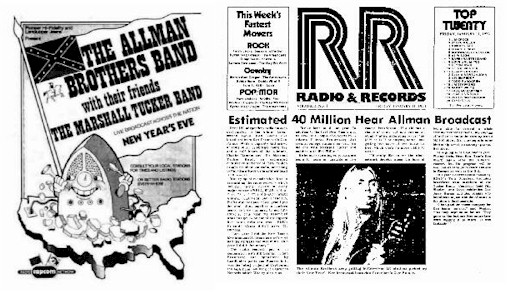
With national airplay peaking in 1973, Dick began to organize the next New Years broadcast
featuring the Allman Brothers and opening the show this year would be the Marshall Tucker
Band because we had just released their debut album. Dick added (150) new stations to the
growing Network he now called
CapCom, he added two national sponsors at $50k each (Landlubber
and Pioneer) and viola... the music industry's first vertically integrated Rock & Roll
promotion was created.
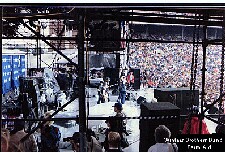
The 1974 New Years show would be broadcast from San Francisco's (15,000) seat "Cow
Palace" and the legendary Fillmore East & West owner Bill Graham was the promoter. Bill invited
San Francisco's FM radio pioneer Tom Donahue to be the show's MC and Tom in turn recruited
several of his San Francisco friends to come on the show, members of the Grateful Dead,
Boz Scaggs and other great San Francisco did interviews during breaks in the live radio
program.
Dick didn't know Bill Graham they'd only met at shows but Dick knew Bill was a showman.
Bill proved that at midnight during the sold-out event when he descended inside a huge
wicker basket dressed as "Old Father Time" sporting a long white beard from the
highest balcony down onto the stage. The Allman Brothers stopped briefly to hail the new
year but soon picked up on the jam just where they'd left... it was a magic New Year Eve
and it was heard worldwide.
The "first of its kind" national radio broadcast was a brilliant success,
especially when the Armed Forces Radio asked to air the show on their global network, Dick
said... Yes! Armed Forces Radio plugged into Dick's live event and broadcast the show all
over the world to an estimated (40) million listeners (as far as we know, is still the
largest radio audience for a live Rock & Roll event). The Allman Brothers Band were
heard across the world that night and their music touched forty million people! This fact
was not lost on music retailers and show promoters around the globe. Their lasting appeal
across the world is testament in part to that one event.
Foreign and domestic album sales sky-rocketed after the show, the new ABB's Warner
Brothers distributed album and the Atlantic Records ABB catalog albums began selling
through the roof. The show launched the career of "The Marshall Tucker Band" and
a couple of months later their debut album had sold (250) thousand copies and became their
first gold and later a multi-platinum album.
Dick's New Year's broadcast was a music industry landmark, after the show the story was
splashed across the front page of every trade paper in the country, banner headlines in Billboard, Radio &
Records, Cashbox. In July of 1975 even the prestigious business
magazine Fortune came to Macon and did a major spread about the meteoric rise
of Capricorn Records, the story recounted the unique trio of personalities Phil, Frank and
Dick.
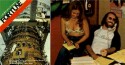
Dick Wooley in
Fortune Magazine
July 1975 |
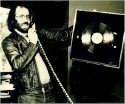
Dick holds ABB's
First Gold/Platinum Album "Eat A Peach" |
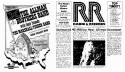
Dick Wooley Headlines
in R & R Jan, 1974
40 Mil. Listeners |

Dicky Betts,
Dick & Frank Fenter
looking good |
|
By 1976 the rise to success at Capricorn Records was overwhelming the staff of the small
company, the venture paid off big time, the artists were headliners and Southern Rock was
ubiquitous on world radio stations. But success took a toll.
That year, Elvin Bishop signed a production deal with Capricorn, Frank Fenter began
playing a track from Elvin's session over and over on his office stereo, knowing that Dick
would hear it in his office next door. This was Frank's usual "not so subtle"
way of letting Dick know what songs he thought should be promoted. After a full day of
Frank's good natured brainwashing, Dick got the message and admitted he liked the song
too, but told Frank the album track needed rearranging because it wasn't structured right
as a single for radio airplay.
Dick took Frank's cassette and played around with the arrangement for a couple of days,
arranging and rearranging it, trying to find the sweet spot that would best fit the days
radio formats. Satisfied with a final arrangement, Frank sent it to producer Bill Symzick
for the final edit. Dick and Frank then flew to LA as they'd done before when they
successfully played the raw cassette tracks of the Marshall Tucker Band to the Burbank
brass.
The Elvin Bishop track was played for WB President Mo Ostin, VP Ed Rosenblatt, head of
Promotion Russ Thyrett... they loved it. Once Warner Brothers' great staff got behind it
"Fooled around and fell in love" was a natural and it quickly became the number
one single on all trade publication's Top 100 singles charts.
Everything at Capricorn was clicking. The little Macon Georgia record company that proved
you didn't have to be in New York or Los Angeles to make it big in the music business.
Reporters from Rolling Stone, Newsweek and Fortune were on the phone or in the offices
constantly, everyone in the company felt like a star.
Capricorn artists were in demand worldwide, everyone wanted them on a project. At our
annual company picnic that only a couple of years before that had been a simple
office barbecue at the lake for employees, was now attended by the major music executives,
movie stars, politicians and iconic celebrates like; Cher, boxing promoter Don King,
comedian Richard Prior, Andy Worhol, Bette Middler, 60 Minutes' Ed Bradley and future
president Jimmy Carter. Macon's airport was crowded with their private jets and reporters
hung on every word, but the pressure cooker atmosphere was building and would resolve in a
way no one could have predicted.
Drugs played an important roll in the culture of 70's music, it was in the recording
studio, in the offices and in our social life, it was as essential as gin in a martini.
Everyone did drugs, some to keep pace, some to escape the pace and some to keep their
demons at bay. The ever-increasing demand from all corners was to become bigger, better,
faster and at Capricorn the pressure took a pound of flesh from everybody.
The price of success exacted an especially heavy toll on Phil Walden, his demon was
alcohol and cocaine addiction. With the success of Capricorn his problems were ragging out
of his control, it manifested in embarrassing public tantrums that kept his lawyers busy
and keeping everyone in the office on edge. Phil's infamous outbursts of uncontrolled
temper were becoming more frequent and explosive, it was impossible to predict when the
next one would happen, anything might set him off and when it did, friends and family
alike made themselves scarce.
Frank Fenter and Dick found themselves in a no-win situation, at the end of the Capricorn
work day their duty now included saving face for the company by smoothing hurt feelings,
repairing damaged friendships and covering up the trail left in the wake of Phil's alcohol
and drug-fueled tirades. After one particular ugly incident in the parking lot of
Frank's LaBistro restaurant, Phil had a felony assault charge filed against him by a
well-known local businessman, the Macon newspaper had a field day.
Only the quick intervention of a lawyer and a large cash settlement to the businessman
kept the violent incident out of the national news. Phil, seemingly undaunted by the
escalating consequences following his public outbursts continued to fed his uncontrollable
addiction and his behavior continued to embarrass everyone. In his own home town
Phil was becoming an object of scorn by many and pitied by others as his unhinged
behavior became news.
Dick opined, "when drugs take over someone's life they go into denial and there's not
a damn thing you can do, especially if they're on top of the world". I'd seen friends
succumb to drug use before, most lived through it, some didn't, but they all went broke
and when they did they took their business associates with them. That was my reason to
start searching for a new venture.
"I discussed my concerns about the future of Capricorn with my family and said be
prepared for a change. In spite of Capricorn artists being on top of the charts at the
time, the office atmosphere was becoming more unbusinesslike and I saw the handwriting on
the wall. Phil had become disengaged from the company day to day affairs and I knew the
long ride for Capricorn would not last much longer."
Success is fun, but it's not as soul satisfying as people think it will be, many times
it's just boring, grinding out one new promotion after another. Dick felt this way
after Elvin Bishop's number one hit single and with two Allman Brothers albums near the
top of the charts and two Marshall Tucker albums climbing the charts. The long days
of promoting radio stations, endless nights in the studio or at clubs with bands,
then up early for work the next day. Dick was exhausted by the four year grind and ready
for a change... after all, for Dick the fun is building a business, not in running it.
On the bright side with all Dick's success there would never be a better time to start a
new venture. Dick hoped took a chance. Hopefully there'd be a soft lining after delivering
Capricorn's artists to the top of the charts that year and to everyone's surprise Dick
resigned in 1976 as Vice President of Capricorn Records.
Professional courtesy dictated that Dick stay on a few weeks to insure a seamless
transition for a successor, and his own conscience dictated to never let on to anyone that
in his own mind he knew that the Capricorn Records party would soon be ending.
Reflecting on the four years since Dick moved his family to Macon to help build Capricorn
Records, it's growth could hardly be imagined. Capricorn in four short years had
sky-rocketed from three guys in a funky little two-room office on Cotton Avenue and no
money into a Southern Rock Empire with sixty employees and a roster of great artists that
sold millions of albums worldwide and annual sales of $30 million. Dick said "It was
one sweet ride".
As Vice President of Promotions at Capricorn from 1972 to 1976 Dick helped launch
several million-selling artists including: The Allman Brothers Band,
Marshall Tucker Band and Elvin
Bishop. Other artists launched into the national spotlight included; the great
Southern Blues band: Wet Willie,
comic-singer-actor Martin Mull, venerable singer-songwriters and "Eric Clapton's
favorite band" Cowboy, the legendary Southern Rock band Grinderswitch,
young Bluesman John Hammond, Jr. and rising Country Music Star Hank Williams, Jr.
Editor's Note: (a) After Dick left Capricorn Records the company
was never able to launch another major artist and it began a decline into bankruptcy amid
lawsuits for unpaid millions in Allman Brothers royalties. Shortly after Capricorn's
bankruptcy, Frank Fenter's meteoric life ended before his time at age 47. With the
help of AA Phil Walden gained control over his alcohol and cocaine addiction and passed
away in 2006. (b) Capricorn Album Diskography.
|
|
| Chapter 4 Rabbit Records & DWA: The start-up.
1976 was a wild and crazy year. Dick
left Capricorn Records with three artists at the top of the charts, helped the Jimmy Carter presidential campaign with band promotions and
advertising. Then, a call from his old friends at Atlantic Records asking Dick to become
part of the Atlantic family again and offered him the financing to set up an independent
record company.
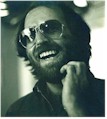
Dick; "If you want a friend, you gotta be a
friend" |
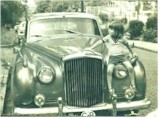
Blinging in Macon.
|
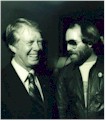
Dick; "Highlight of my life working with Jimmy
Carter"
|
In short order, Dick's attorney Eric Kronfeld finalized a deal with Atlantic and the doors
opened at the new Dick Wooley Associates office in Macon
along with a new label Rabbit Records. Flush with funding Dick recruited top Warner Brothers
promotion man Al Moss to join the company
and asked two great touring bands of the day to sign on with him. Dru Lombar's Grinderswitch,
managed by Alex Hodges, now president of "Neiderlander" and the Winters
Brothers Band, managed by Charlie Daniels' manager Joe
Sullivan, now a key player in the Branson Missouri mega entertainment complex.
After releasing both band's new albums, Rabbit Records mid-charted both albums, the
Grinderswitch's Redwing album and the Winters Brothers debut album. Both bands continued
to build their career by touring a year with the Charlie Daniels Band, The Allman Brothers
Band, Marshall Tucker Band and Lynyrd Skynyrd.
Dick had a neighbor on his Walnut Street office in Macon, a young attorney/band manager
Pat Armstrong. One day in 1977, Pat came to Dick and asked if he would help launch a new
band Pat managed and said they were being looked at by a major record producer. Pat had
been Lynyrd Skynyrd's first manager, before Alan Walden. Pat since then had developed a
huge roster of college circuit bands but felt left out of the Southern Rock explosion even
though he had been an early player on the scene but Pat hadn't participated in it's
success.
Pat drove Dick to a seedy downtown Macon flop-house to watch his new band Molly
Hatchet perform at a dark basement club in the Dempsy Hotel. It was the venue from Hell,
with toilet water standing an inch deep on the dance floor, Dick said, "it was a
miracle nobody was electrocuted." But, as bad the club, Dick saw the band's potential
and signed on to promote their debut album when it was released.
Dick got the heads-up from Pat a or so month before Molly Hatchet's album was released on
Epic and went to work laying the groundwork and pre-promoting the release radio stations.
Dick added so many stations the first week of the band's debut release that Epic found
itself caught off guard, but they responded quickly throwing a pile of development money
at Pat to get the band on a national tour. Soon, the whole country knew about Molly
Hatchet as the self proclaimed new "Bad
Boys" of Southern Rock were called had their first gold record..
Molly
Hatchet's debut album and tour was a huge
success, the album went gold, later it went multi-platinum. There was a big smile on Pat
Armstrong's face because his future was now bright with a hit record and Molly
Hatchet on a coast-to-coast tour of the country.
And, Dick was happy because once again he'd proven his ability to take an unknown band and
promote them into a multi-million album success. Dick, against all the odds had his first
major breakout since leaving Capricorn only the year before... and it felt great!
In 1981 a devastating music tsunami called "Disco" swept over the landscape and
sunk the radio airplay for all other types of music including Southern Rock. Dick's
marriage of ten years also hit the rocks that year and he needed to re-charge the old
creative batteries, he decided to take a couple years away from the music business, move
to a beach and live a peaceful quiet life by the sea.
Dick moved to Tybee Island, a small island twenty miles
off the coast of Savannah Georgia, at the dead end of highway 80. Tybee was a small
fishing village of 1500 or so people and it was the perfect spot to get lost, chill out,
maybe write a few songs, buy a Hobie Cat and learn how to sail, maybe build a beach house
and look at the record business in the rear-view mirror.
|
|
|
Chapter 5
2004 King Mojo Records: The
start-up.
Fast-forward to 2002... Dick was enjoying life in the Tybee
Island slow-lane, writing songs for his Cotton States Music Publishing and had begun
marketing ocean front and college community properties with his new partner Arthur
Schultz, President of Benchmark/Atlantic Property Development. Dick and Arthur became
friends then partners to develop Arthur's original idea of college student communities at
quality schools and they opened Benchmark/Atlantic offices in seven university towns in
the Southeast and Midwest to market the new concept.
College student communities were an instant hit with both investors and parents of
students due to the tax strategies available at the time. With a staff of thirty
salespeople Art and Dick sold their college communities, building 500 student condos and
produced sixty-five million dollars in sales. The process of planning, acquiring
land, getting construction loans, long term financing, city, state and university
approvals, then sales and construction for two years, with no break, had been an
exhilarating and exhausting. So upon completion, Dick went back to his new beach house and
decided to try retirement again.
On a personal aside; the success of Benchmark/Atlantic's student communities proved to
Dick that his sales and marketing skills applied equally well to other businesses and Dick
was deeply gratified to know that he wasn't just a one-trick-pony.
Family interests obliged Dick to return to his home town of Atlanta in 2004 and after a
few months putting his portfolio of songs together for Cotton States Music Publishing and
other odds and ends, he found that not having a full time project boring. Dick had always
been hooked on some kind of process, either promoting new music or new ideas, "it's
what gets me out of bed in the mornings" ... so his search for a new project began in
earnest.
Dick had an open mind and was always interested in blues music, and he saw an opportunity
developing when a new generation of music fans sold out several summer blues festivals
that year. An idea began to form around serving this niche that attracted thousands of
young fans, but new blues music was not being played by corporate radio!
The failure of radio to address a developing niche market was a reminder of the FM-AM
takeover in the 1970's, a lesson that was not lost on Dick. Experience tells you when to
look beyond the flavor of the week and tell when it's time start something new. That time
is usually when entrenched corporations pick the low hanging fruit for an easy dollar and
take their eyes off the long term.
Dick's hobby had been developing websites and he'd built dozens of them beginning in the
early 1990's. He told friends in the music business about the future of online music
delivery and advised them to adopt the new technology in their business, but they didn't.
In the 90's the major record companies had a golden opportunity to incorporate the new
technology into their business and if they'd taken advantage of the idea maybe they would
have retained their music distribution monopoly.
But, sadly at the crossroads of music and technology, arrogant record companies believed
the ride would go on forever and that it was a preposterous idea that someone working out
of a dorm room would ever be in a position to challenge their power in the music
industry... soon an idea by the name of Napster who's time had come proved them all very
wrong! Today the corporate music business is becoming more irrelevant with each
passing day and is in financial free-fall, passed by in an online world, much like when
cars took over from the horse drawn carriage.
Today multi-national corporate record companies and land based radio stations slip further
into irrelevance, and every day a new Internet application dismantles their business model
piece by piece. If you need further evidence of their death rattle, listen to the mindless
drivel that passes off as music today and played by corporate media.
But, music stagnation offers a new challenge, how to bring the best original talents and
people interested in hearing the best original new music together. People that love real
blues based, rock and jam music that's being ignored by corporate radio want more than is
offered. After talking it over with internet savvy friends, the idea opened up... start an
internet based Indy record label that specializes in contemporary Blues music and
the newly named King Mojo Records website was soon online.
Dick knew to be a successful provider of music that he and so many others love, would have
to be driven by original talent. Helping look on the short list of original blues artists
was his friend of thirty-years, guitar gunslinger and blues rock legend Dru Lombar. Dru
was founder and leader of the legendary Southern Blues Rock band
"Grinderswitch". Dick had worked with the band at Capricorn and Rabbit Records.
Dru and Dick got together in Atlanta the next week for a meeting, Dru signed on with
the new label and the King Mojo Record company start-up was official.
Several emerging blues-rock artists were identified in the months that followed and each
was asked if they were ready to take help develop a new idea. After agreements were
signed, the first King Mojo artists were showcased in 2004 on the first virtual release,
the King Mojo All Star series.
The new virtual release immediately gained traction on Internet radio and the first album
sampler was free to download and on request hard copies were sent to land based radio.
King Mojo Records Allstars Vol. 1 got over 100,000 hits the first month and nearly 60,000
fan downloads.
The idea was simple and straightforward... offer great original blues and rock music by
emerging artists, then use the website so fans and radio stations alike could download the
new up and coming artists music free.
Our goal was "find the best new contemporary blues artists, roots rock or fusion and
showcase them on the web to the world." We began promoting our first King Mojo
series and now our business model has proven so successful that several King Mojo Records
artists have made it onto the national charts.
King Mojo Allstars Vol. 1
- King Mojo Allstars Vol. 2
- King Mojo Allstars Vol. 3
|
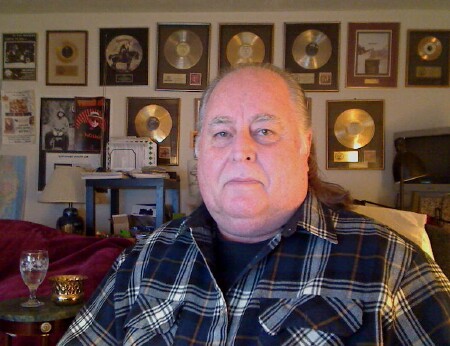 |
|
"I
always thought if I liked a song, at least million other people would too...
so... there was your first gold record." |
~~~o~~~
"Promotion
Man"
By Kiki Lee

Copyright © 2004-2015 King Mojo
Records & Entertainment, Copyright © 2004-2015 Cotton States Music, BMI, Dick Wooley
Associates |
|
|
|
|